After Getting Lost 3 Times in Kyoto, This Map App Finally Made Solo Travel Feel Safe
You know that sinking feeling when you're standing in a foreign city, phone battery dying, streets all looking the same? I’ve been there—lost in Kyoto with no clue, heart racing, wishing I had help. But then I found a map app that changed everything. It wasn’t just directions; it made me feel seen, guided, and confident. This is how one simple tool transformed my solo trips from stressful to empowering. No more panic, no more circling the same temple twice. Just peace of mind and the freedom to wander without fear. And honestly, it didn’t just change how I travel—it changed how I see myself when I’m on my own.
The Moment I Knew I Needed More Than Just a Map
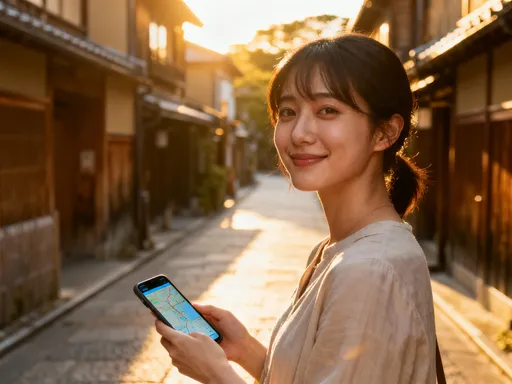
It was my third day in Kyoto, and I’d already gotten lost twice. The first time, I was trying to find a tiny tea house tucked behind a bamboo grove—something I’d read about in a travel blog. The second, I was making my way back to my guesthouse after visiting Fushimi Inari. But this time, standing on a quiet side street with the sun setting behind the wooden machiya houses, I felt truly stuck. My phone was at 12 percent, the map kept spinning, and every alley looked the same. I remember clutching my bag tighter, glancing around, wondering if I should just duck into a convenience store and wait it out. That’s when it hit me: I didn’t just need directions. I needed to feel safe.
What I realized in that moment wasn’t just about technology—it was about trust. I had been relying on a map app that treated me like a car, not a person. It told me to “turn left in 200 meters,” but didn’t warn me that the path ahead was narrow, poorly lit, or even closed off. It didn’t know I was alone, that I was tired, or that I’d feel more comfortable walking a slightly longer route if it meant staying on a busier street. I needed something that could read the situation, not just the coordinates. I needed a tool that felt like it had my back. And that’s when I started searching for an app that wasn’t just smart—but thoughtful.
Looking back, that moment of panic was a turning point. It wasn’t the first time I’d felt uneasy while traveling alone, but it was the first time I admitted I didn’t have to tough it out. I didn’t have to pretend I was fearless. I could use technology to support me, not just get from point A to point B. And honestly, that shift in mindset—accepting help, embracing tools, trusting myself with support—was just as powerful as finding the right app.
Why Most Map Apps Fall Short in Real-Life Travel Moments
Let’s be honest: most map apps are built for efficiency, not empathy. They’re designed to get you somewhere fast, often assuming you’re in a car, on a bike, or in a city you already know. But when you’re walking through a foreign neighborhood, carrying a daypack, maybe a little jet-lagged, the last thing you want is a robotic voice saying “recalculating” while you’re trying to stay calm. I’ve had apps tell me to “turn right now” when there was no visible turn, or send me down a staircase I didn’t see on the map. Once, I followed a route that led me straight into a construction zone—no warning, no alternate path. I ended up backtracking in the rain, frustrated and soaked.
And it’s not just about bad routing. A lot of apps don’t understand the human side of travel. They don’t know that you might want to avoid dark alleys at night, or that you’d appreciate a suggestion to stop for water or sit down for a minute. They don’t adapt to your pace, your comfort level, or your need for reassurance. When you’re solo, especially as a woman, that lack of context can make a big difference in how safe you feel. I remember one evening in Kyoto, walking back from dinner, when my usual app sent me down a narrow path with no streetlights. I hesitated, heart pounding. I knew I could follow the route, but I didn’t want to. I wanted an option that respected my instincts.
Another issue? Offline access. So many apps assume you’ll have constant internet, but that’s not always true—especially in older cities with spotty coverage or when you’re trying to save data. I’ve had maps freeze, routes disappear, or voice guidance cut out mid-instruction. And once your battery starts dropping, the stress multiplies. You start rationing screen time, afraid to check your location. That’s not freedom—that’s anxiety with GPS. What I needed wasn’t just a map. I needed a companion that worked when I needed it most, not just when the signal was strong.
Discovering the App That Felt Like It Knew Me
I found it by accident, really. A friend mentioned she used a different app when she traveled solo through Japan. “It’s not the one everyone uses,” she said, “but it feels like it gets me.” Skeptical but desperate, I downloaded it before my next trip. The first thing I noticed was how it asked about my walking preferences—did I want the fastest route, the flattest, or the safest? I chose “safest,” and immediately, the suggested path changed. It added a few extra minutes, but kept me on wider streets with more foot traffic. That small choice made me feel heard.
Then there was the augmented reality feature. When I stood at a crossroads, unsure which way to go, I could lift my phone and see arrows overlaid on the real world. It showed me exactly where to turn, even if the street signs were in Japanese. No more guessing. No more double-checking. Just a calm, clear path forward. I remember using it near Kinkaku-ji, where the paths branched in every direction. Instead of standing there, stressed and spinning in circles, I just held up my phone and followed the glowing arrow. It felt like magic—but better, because it was real.
But what really won me over were the little things. The app would suggest rest spots—benches, quiet gardens, even vending machines with cold drinks. It highlighted routes with good lighting at night. It remembered my preferred pace and adjusted the estimated arrival time accordingly. And when I was low on battery, it switched to a power-saving mode that kept essential navigation running without draining my phone. It wasn’t flashy. It didn’t try to impress me. It just worked—quietly, reliably, like a good friend walking beside me.
How This App Changed My Relationship with Solo Travel
Before, I used to dread arriving in a new city. I’d spend hours studying maps the night before, printing out screenshots, writing down landmarks. I’d feel tense the whole train ride in, rehearsing my route in my head. But now? I actually enjoy the journey. I don’t panic when the train station is bigger than expected or the exit signs are confusing. I know I have a tool that will guide me, not just with directions, but with care.
I’ve started taking more spontaneous walks—turning down a side street because it looked interesting, following a path that led to a small shrine, stopping to talk to a local shopkeeper who smiled and offered me a sample of matcha. Because I wasn’t constantly worried about getting lost, I could be present. I could look up, notice details, breathe. I remember one afternoon in Nara, I saw a narrow path leading into a grove of trees. On my old app, I would’ve hesitated—what if I couldn’t find my way back? But with this one, I thought, “Why not?” I followed it, and it led me to a quiet temple garden, completely empty. I sat there for twenty minutes, just listening to the wind. That moment wouldn’t have happened if I hadn’t felt secure in my ability to find my way back.
Solo travel used to feel like a test—could I handle it? Could I be brave enough? Now it feels like a gift. I’m not proving anything. I’m just exploring, learning, growing. And a big part of that shift came from knowing I wasn’t alone. Not because I had people with me, but because I had a tool that supported me in a way that felt personal, almost intuitive. It gave me back my curiosity. It gave me back my courage. And most of all, it gave me back my joy.
The Hidden Features That Made All the Difference
It’s easy to focus on the big features—like turn-by-turn navigation or offline maps—but for me, the real game-changers were the subtle ones. Take the AR street view. It’s not something I use every minute, but when I do, it’s a lifesaver. Standing at a busy intersection in Kyoto Station, surrounded by signs in kanji, I could hold up my phone and see a clear, animated path guiding me to the correct exit. It wasn’t just helpful—it was calming. No more second-guessing, no more asking strangers for help when I didn’t want to. I could move with confidence.
Then there’s the automatic route recalibration. I’ve had other apps freeze or take forever to recalculate when I made a wrong turn. This one adjusts instantly, without that jarring “recalculating” voice that used to make my stomach drop. It just gently redirects me, like, “Oh, you went that way? No problem—here’s how to get back on track.” That small difference in tone—calm instead of corrective—made me feel supported, not scolded.
Another feature I didn’t know I needed? Crowd-sourced safety ratings. Before I walk a route at night, I can see if other users have marked it as well-lit, busy, or quiet. It doesn’t make decisions for me, but it gives me information I can trust. I remember one evening in Osaka, I was heading back to my hotel and saw that the shortest route had low safety ratings after dark. The app suggested a slightly longer path with more streetlights and shops. I took it—and felt so much better. I wasn’t just safer. I was more at ease.
And the battery-saving mode? A quiet hero. It dims non-essential features but keeps navigation, voice prompts, and location tracking running. On a long day of walking, that extra hour of battery life meant I didn’t have to cut my exploration short or hunt for an outlet. I could keep going, keep discovering, without that underlying stress of “What if my phone dies?” These features didn’t just make the app useful—they made it trustworthy.
Sharing It With Friends Who Thought They Didn’t Need It
I told my friend Lisa about it over coffee back home. “You’re obsessed with that app,” she said, laughing. “I’m fine with what I have.” She’s a seasoned traveler, always used the same mainstream map. But a few months later, she texted me: “Okay, I downloaded it for my trip to Seoul. Why didn’t you tell me about the AR thing sooner? It saved me at the airport.” I just smiled. I’ve heard that story a few times now.
Another friend, Maria, was even more skeptical. “I don’t like apps that do too much,” she said. “I want to figure things out on my own.” But after her daughter convinced her to try it for a solo trip to Kyoto, she called me from a park bench. “I just found a little shrine I never would’ve seen,” she said. “The app suggested a quiet path, and I took it. It was beautiful. And I didn’t get lost once.” Her voice was lighter, happier. I could hear the relief.
What’s funny is that none of them came back saying, “The technology is amazing.” They said things like, “I felt safer,” or “I wasn’t stressed,” or “I actually enjoyed walking.” That’s the real win. It’s not about the tech—it’s about how the tech makes you feel. And when your friends, even the ones who swore they didn’t need it, start using it and loving it, you know it’s not just a gadget. It’s a change in how we experience the world.
More Than Directions: How a Simple Tool Gave Me Back My Freedom
When I think about what this app has given me, it’s not just convenience. It’s freedom. The freedom to explore without fear. The freedom to be curious. The freedom to trust myself. Traveling solo used to feel like a challenge I had to overcome. Now it feels like a choice I get to enjoy. And that shift didn’t happen because I became braver overnight—it happened because I had support that respected me, my pace, and my boundaries.
Technology doesn’t have to be flashy or complicated to be transformative. Sometimes, the most powerful tools are the quiet ones—the ones that don’t draw attention to themselves but make everything else possible. This app didn’t take over my trip. It didn’t plan every moment or tell me where to go. It simply made it easier to listen to my own instincts, to say yes to new paths, to stay present in the moment. It didn’t control my journey—it protected it.
And in a way, it taught me something about myself. I used to think needing help meant I wasn’t capable. But now I see that using the right tools isn’t a weakness—it’s wisdom. It’s knowing that being independent doesn’t mean doing everything alone. It means having the freedom to choose how you move through the world, with the support you need to feel safe and strong.
So if you’ve ever stood in a foreign city, heart racing, phone dying, wondering which way to turn—know this: you’re not alone. And you don’t have to figure it all out by yourself. There are tools out there that don’t just guide your steps, but honor your journey. And sometimes, all it takes is one small change to turn a stressful trip into a story you’ll cherish forever.