Tired of awkward money talks with friends? This changed how we split bills forever
We’ve all been there—laughing over coffee, then freezing when the bill arrives. Who paid last? Who owes what? It’s not about the money, it’s the *awkwardness*. I used to avoid group outings just to skip the split drama. Then I found a simple tool that changed everything. No more guilt, no more math stress—just smooth, fair sharing. And honestly? Our friendships feel lighter because of it. It’s not magic, and it’s not some complicated system. It’s just a smart little app that quietly handles what used to be the most uncomfortable part of hanging out. And now, instead of dreading the end of the night, we actually enjoy it all—the laughter, the stories, the connection—without that little knot of anxiety in our stomachs.
The Hidden Tension in Friendly Gatherings
Let’s talk about something we rarely admit out loud: money can quietly damage even the closest friendships. Not because we’re greedy or petty, but because unspoken expectations and unbalanced contributions build up over time. Think about it—how many times have you walked out of a fun dinner, still smiling from the conversation, only to feel a slow drip of annoyance when you realize you covered more than your share? Maybe your friend said they’d Venmo you “later” and then forgot. Or maybe someone insisted on paying the whole check, making you feel indebted in a way that didn’t feel good. These aren’t just small oversights—they’re emotional landmines disguised as social moments.
I remember one evening with my college friends. We hadn’t seen each other in months, and we were all so excited to catch up. The night was perfect—great food, even better laughs. But then the check came. One person grabbed it, said they’d handle it, and started dividing it up on a napkin. Suddenly, the mood shifted. People started hesitating, checking their wallets, whispering about what they ordered. Someone said, “Wait, did we agree on splitting tax and tip?” Another replied, “I only had water, so I shouldn’t pay for drinks.” It wasn’t angry, but it was awkward. And that awkwardness lingered, like a stain on an otherwise perfect night.
Over time, these moments start to add up. You begin to notice patterns. Maybe one friend always volunteers to pay but then never follows up for reimbursement. Or someone always orders the most expensive thing and acts surprised when the bill is high. It’s not about the $5 or $10—it’s about fairness. When we feel like we’re giving more than we’re getting, even in small ways, we start pulling back. We say no to plans we’d actually love to go to. I had a friend, Sarah, who used to love weekend brunches. But she started declining invites, not because she didn’t want to see us, but because she dreaded the “bill chaos.” She told me, “I just don’t want to have that conversation again.” And that broke my heart. Because friendship shouldn’t come with financial anxiety.
This isn’t just Sarah’s story. It’s a quiet epidemic in modern social life. We’re more connected than ever, yet the simplest things—like sharing a meal—can become sources of stress. We’ve normalized the discomfort, pretending it doesn’t matter. But it does. And the good news? It doesn’t have to be this way. There’s a better way to handle shared expenses—one that protects both our wallets and our relationships.
How Digital Payment Tools Quiet the Chaos
Enter digital payment apps—the unsung heroes of modern friendship. These aren’t just tools for sending money. They’re peacekeepers. They’re the quiet referees who step in when emotions run high and math gets messy. Think about it: in the past, splitting a bill meant scribbling on napkins, arguing over who had the avocado toast, and then spending the next week chasing someone for $14.50. Now? You can split the bill in seconds, send a payment with one tap, and move on with your life. No guilt. No passive-aggressive texts. No mental math during quality time.
I first realized how powerful these tools could be during a girls’ weekend. We were at a cozy cabin, cooking together, laughing, enjoying each other’s company. Then someone mentioned groceries. “I paid for the wine and snacks,” she said. “And I got the gas on the way up,” another added. “I covered the rental,” said a third. My stomach dropped. This was how drama started. But then one of us pulled out her phone and opened a group payment app we’d all been using. She quickly logged the expenses—$65 for groceries, $40 for gas, $300 for the rental—and the app automatically calculated who owed what. Within minutes, we’d all settled up. No conversation needed. No tension. Just clarity.
That moment changed everything for me. It wasn’t just convenient—it was *emotional relief*. I wasn’t carrying the weight of “Who owes me?” in my head anymore. I wasn’t wondering if I’d forgotten something or if someone was taking advantage. The app didn’t care about feelings. It just showed the facts. And somehow, that made us *more* connected, not less. Because now, we could focus on what really mattered—being together.
These tools work because they remove the guesswork. They’re like having a tiny, invisible assistant at every gathering who whispers, “Anna paid for drinks, you owe $12,” or “Lena covered the pizza, your share is $18.” No drama. No memory lapses. Just fairness, served quietly. And when fairness is built into the system, trust grows. You start to feel safe knowing that no one is keeping score—because the app is. And that safety? That’s priceless.
A Real-Life Shift: From Stress to Smooth Sailing
Let me tell you about last summer. Five of us—me, my sister, and three of our closest friends—rented a house by the lake for a long weekend. In the past, trips like this always ended with someone feeling shortchanged. One year, my sister paid for everything and spent the next month sending reminders. Another time, we tried to split cash at the end, and two people forgot to bring enough money. It wasn’t anyone’s fault, but it always left a little cloud over what should have been a joyful memory.
This time, we decided to try something different. Before we even packed our bags, we created a group in a shared payment app. We named it “Lake House 2023” and agreed on one rule: every shared expense gets logged immediately. The rental? Logged. Gas? Logged. Groceries? Logged. Even the $3 bag of chips someone grabbed at the convenience store—logged. Every night, we’d sit around the fire, glance at the app, and see who needed to pay whom. It took less than a minute. No stress. No math. Just peace.
One night, someone joked, “I feel like we’re running a tiny startup!” And we all laughed. But later, I realized there was truth in that joke. We *were* running something—just not a business. We were running a little community of care. And the app was our system of trust. No one had to ask, “Did you get that?” No one had to say, “I think you owe me.” The numbers spoke for themselves. And because of that, we were freer to just *be*. We swam, we cooked, we stayed up late talking. We weren’t distracted by the usual financial undercurrents. And when it was time to leave, instead of tension, we had plans. “Next year, let’s do the mountains,” someone said. And we all agreed, without hesitation.
That trip wasn’t just fun—it was healing. It reminded me that friendship doesn’t have to be complicated. That we can love each other deeply *and* handle money with grace. The app didn’t create our bond—it protected it. It removed the friction so the connection could shine.
Beyond Convenience: Strengthening Emotional Bonds
Here’s what I’ve learned: these tools aren’t just about convenience. They’re about emotional safety. When money is handled fairly, relationships breathe easier. I know a couple—let’s call them Mark and Lisa—who started using a shared wallet feature to manage their date nights and joint purchases. Before, they’d often argue about who paid for what. “I got dinner last time,” one would say. “But I bought the movie tickets,” the other would reply. It wasn’t about the money—it was about feeling seen, feeling appreciated.
Then they started using the app. Every shared expense goes in. They can see at a glance who’s ahead, who’s behind. And something amazing happened: the arguments stopped. Lisa told me, “It reduced our money fights by at least 80%. We don’t have to keep track in our heads anymore. We don’t have to prove we’re contributing. We just *know*.” That certainty changed everything. It wasn’t just about fairness—it was about trust. They stopped seeing each other as opponents in a financial game and started seeing each other as partners.
And that’s the real power of these tools. They don’t just move money—they move trust. They remove the guessing from generosity. You’re not wondering if you’re being fair. You’re not worrying that you’re being taken for granted. You can just *be* generous, freely and joyfully, because the system has your back. It’s like the app becomes a silent witness to your care. “I paid for her coffee,” it says. “And she covered my lunch.” No scorekeeping. Just balance. And in that balance, connection grows deeper.
One friend told me, “I used to dread group trips because of the money stress. Now, I look forward to them. I feel lighter. I feel like I can just enjoy the moment.” That’s the shift. It’s not about the tech—it’s about the emotional freedom it gives us.
Making It Work for Your Circle
Now, you might be thinking, “This sounds great, but how do I actually start?” The good news? It’s easier than you think. You don’t need to download a new app or become a tech expert. Just pick one that your group already uses—Venmo, Zelle, PayPal, Cash App, whatever feels familiar. The key is consistency, not complexity.
Start by creating a group. Give it a fun name—“The Brunch Squad,” “Wine & Whine Club,” “Family Fund”—something that makes it feel light and personal. Then, set one simple rule: log any shared expense right away. Did someone pay for coffee? Log it. Did you buy snacks for the potluck? Log it. Did you cover the parking? Log it. The faster you log it, the less likely it is to be forgotten. And the less you have to remember, the more you can enjoy each other.
The first few times might feel a little over-the-top. You might laugh as you pull out your phone at the table. “Wait, let me log this!” you’ll say, and everyone will giggle. But that’s okay. Laugh about it. Make it part of the fun. Soon, it’ll become second nature—like setting the table before dinner or washing your hands before cooking. It’s not a chore. It’s a habit of care.
And if someone forgets? No big deal. A gentle, “Hey, can you log that wine you bought?” is all it takes. No blame. No guilt. Just a quick fix. Over time, it becomes the norm. And when it does, you’ll notice something beautiful: the conversations get lighter. The plans get more frequent. The joy gets bigger. Because you’ve removed a hidden weight.
When Tech Meets Emotional Intelligence
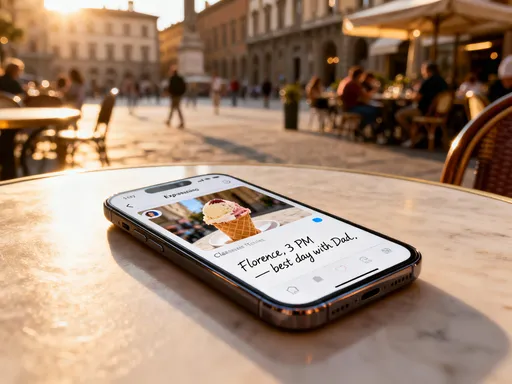
Here’s what I love most: the best tools don’t replace human connection—they support it. They don’t make us colder or more transactional. They free us to be more present, more generous, more *human*. I’ve seen friends use the app to send payments with sweet notes: “Thanks for the great night :)” or “You’re the best wingwoman!” or “This is for the ice cream—worth every penny!” Those little messages turn a financial transaction into a moment of care. The tech handles the math. We handle the heart.
And that balance is everything. Think about it: we use technology to enhance so many parts of our lives—our health, our homes, our workouts. Why not our relationships? This isn’t about letting apps run our lives. It’s about using them wisely, so we can focus on what matters. A quick, “Hey, the app says I owe you—sending now!” opens space for warmth, not tension. It’s not cold. It’s clear. And clarity is kind.
One friend told me, “I used to avoid asking for money because I didn’t want to seem pushy. Now, I don’t have to ask. The app shows it, and I can send a payment without any awkwardness.” That’s emotional intelligence in action. We’re not avoiding the conversation—we’re improving it. We’re using tech to make our relationships *better*, not worse.
And honestly? That’s the dream. To use technology not to distract us, but to deepen our connections. To help us show up fully, without the background noise of financial stress. Because when we’re not worrying about who paid for what, we can truly be there—for the laughter, the tears, the quiet moments that make life meaningful.
A Lighter Way to Live—Together
In the end, it’s not about the apps. It’s about what they give us back: time, energy, peace. Every time we remove a small stress, we make room for more joy. These tools don’t make us colder or more transactional. They help us be more human. Because when we’re not carrying the weight of unpaid debts in our heads, we can breathe easier. We can laugh louder. We can stay present.
I used to think friendship was about big gestures—surprise visits, long talks, grand support. And those things matter. But I’ve learned that friendship is also built in the small moments. In the coffee runs. In the shared rides. In the group dinners. And in how we handle the bill at the end.
When we use tools that promote fairness and clarity, we’re not being cold. We’re being kind. We’re saying, “I value our time together. I don’t want anything to get in the way of that.” And that’s a powerful message.
So if you’ve ever felt that little knot of anxiety when the check comes, know this: you’re not alone. And there’s a better way. Start small. Try it with your closest circle. Make it light. Make it fun. And watch what happens when you stop worrying about money—and start enjoying each other again.
Because that’s the real win. Not balanced accounts. But balanced hearts. And that’s something no app can calculate—but every one of us can feel.