Beyond the Route: How Navigation Apps Quietly Keep Me on Track—And Calm
We’ve all been there—staring at a map pin, heart racing, wondering if we’ll make it on time. I used to stress constantly about getting lost or missing turns. Then I noticed something small but powerful: the quiet way my navigation app shows not just where I’m going, but how far I’ve come. It’s not just about directions. It’s about progress. That little bar filling up? It calms my mind, keeps me focused, and honestly, makes me feel more in control—even when life feels off course. And isn’t that what we all want? Not just to arrive, but to get there without losing our peace along the way?
The Hidden Stress of Modern Travel
Let’s talk about something most of us don’t admit: how exhausting it is just to get from one place to another. It sounds simple, right? Turn left here, go straight for two miles, park, and walk inside. But in reality, every trip carries invisible weight. You’re not just driving—you’re managing time, emotions, expectations, and often, other people’s needs. Maybe you’re rushing to a doctor’s appointment after dropping the kids at school. Or heading to visit your mom who’s been feeling unwell. The destination matters, yes—but so does arriving calm, present, and not already drained before the real moment even begins.
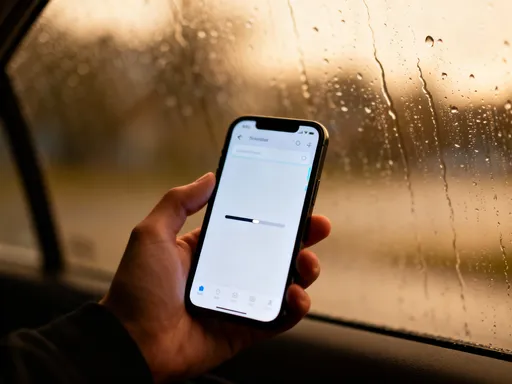
I remember one rainy Tuesday, driving to a parent-teacher conference. The windshield wipers were slapping too fast, my phone kept switching between GPS and no signal, and the voice guidance cut out mid-instruction: ‘In five hundred feet…’ and then—silence. My hands tightened on the wheel. Was I supposed to turn now? Did I miss it? The clock was ticking, and I could feel the familiar knot forming in my chest. It wasn’t just about being late. It was about failing—failing my child, failing myself, failing the image of the composed, capable woman I thought I should be. That moment wasn’t about technology failing me. It was about how much emotional energy I was putting into simply navigating space.
What I realized later was that the real stress wasn’t the route. It was the uncertainty. Not knowing if I was on track, not seeing progress, not having any visual proof that I was moving forward. That’s when I started paying attention—not just to where the app told me to go, but to how it made me feel. And what surprised me most was how something as simple as a progress bar—just a little blue line inching across the screen—could bring such relief. It wasn’t magic. It was design meeting emotion in the quietest, most powerful way.
From Directions to Emotional Anchors: What Progress Tracking Really Does
Think about it: navigation apps don’t just tell you which way to turn. They give you a constant, gentle reminder that you’re moving. That may sound small, but for someone juggling a million things—meals, schedules, emotional check-ins with kids, work deadlines—it’s everything. The progress bar, the estimated time of arrival that updates in real time, the little car moving along the route—these aren’t just features. They’re emotional anchors. They ground you when everything else feels like it’s spinning.
I started noticing this during my evening commute. After a long day at the office or running errands, I’d get in the car already tired. The last thing I wanted was to worry about traffic or detours. But when I opened my app and saw that ‘23 minutes remaining’ and the progress bar steadily filling, something inside me relaxed. It wasn’t that the drive got shorter. It was that I could see the end. I wasn’t floating in uncertainty anymore. I had a timeline, a rhythm, a sense of forward motion. That visual cue did more than inform me—it reassured me.
Psychologists talk about how our brains crave feedback. We need to know we’re making progress, even in small ways. That’s why crossing items off a to-do list feels so good. The progress bar in a navigation app works the same way. It gives your brain a quiet ‘yes, you’re doing it’ without you even realizing it. You’re not just being guided—you’re being supported. And that support makes a difference, especially when you’re the one holding everything together.
What’s beautiful is that this isn’t about high-tech wizardry. There’s no AI predicting your mood or voice assistant reading your mind. It’s just a simple, well-placed visual that says, ‘You’re on your way.’ But in a world where we’re constantly asked to multitask and perform, that small signal of progress can be the difference between arriving frazzled and arriving with your calm intact.
The Family Road Trip That Didn’t Fall Apart
Family road trips used to be my stress test. I’d pack the car the night before, double-check the snacks, charge everyone’s tablets—and still, by mile thirty, someone would be arguing, someone else would need a bathroom break, and I’d be second-guessing every decision, including whether we should’ve just stayed home. The worst part? The constant ‘Are we there yet?’ chorus from the backseat. I’d say, ‘Not yet,’ and three minutes later—‘Are we there yet?’ It wasn’t just annoying. It made me feel like I was failing at managing expectations.
Then, on a trip to the mountains last summer, I tried something different. Instead of guessing, I turned the phone toward the kids and said, ‘Look—see this bar? That’s how much of the trip we’ve done. When it’s full, we’re there.’ I expected them to ignore it. But they didn’t. They watched it. They cheered when it passed the halfway point. They even started saying, ‘Mom, you’re doing great—look how much green is filled in!’
Suddenly, the journey wasn’t just about enduring time. It was about sharing progress. The app became a tool for connection, not just navigation. The kids felt included. I felt seen. And the constant questioning stopped because they could see the answer. That visual progress bar did what I couldn’t—it gave them patience, and it gave me peace.
What I realized is that progress tracking isn’t just for drivers. It’s for everyone in the car. It creates transparency. It turns a vague, endless-feeling journey into something measurable, predictable, and even kind of fun. And in a family where everyone’s needs matter, that shared sense of forward motion can be the glue that holds the trip—and the mood—together.
How Progress Tracking Supports Daily Routines and Personal Growth
Here’s something I didn’t expect: the same part of my navigation app that helps me drive has quietly started helping me live. I began to notice that when I go for a walk—just 15 or 20 minutes around the neighborhood—I feel better not just physically, but mentally. And a big part of that is because my fitness app (which works a lot like my navigation app) shows me a little circle filling up as I move. It’s the same principle: progress made visible.
Walking used to feel like a chore. I’d look at the empty path ahead and think, ‘Is this ever going to end?’ But now, when I see that completion ring growing, it changes everything. It’s not about speed or distance. It’s about seeing that I’m doing it. That I’m moving forward. That I’m not standing still. And that small visual cue—just like the progress bar in the car—gives me a quiet boost of confidence.
This idea has spilled into other parts of my life. When I’m meal prepping for the week, I mentally break it into steps and check them off. When I’m working on a personal project, like learning to knit or organizing old photos, I look for small signs of progress. It’s the same mindset: not waiting until it’s perfect, but celebrating that it’s happening. And that mindset? I think I learned it from my phone.
Technology often gets blamed for making us impatient—always wanting instant results. But this kind of design does the opposite. It teaches us to appreciate the journey. It reminds us that growth isn’t a single moment. It’s a series of small steps, each one moving us forward. And when we can see those steps, even in a simple bar on a screen, we’re more likely to keep going.
Choosing the Right App: Features That Actually Matter
Not all navigation apps are created equal when it comes to supporting your peace of mind. I’ve tried a few, and while they all get you from point A to B, some do it in a way that feels calmer, clearer, and more trustworthy. The key isn’t fancy graphics or voice options—it’s how well the app shows your progress and keeps you informed without overwhelming you.
Here’s what I look for now: a clean, easy-to-read progress bar at the top or bottom of the screen. Not hidden in a menu. Not tiny. Something I can glance at and instantly know how far I’ve come and how much is left. I also pay attention to how the estimated time updates. Does it jump around wildly with every traffic light? Or does it adjust smoothly, giving me a realistic sense of timing? The best apps feel steady, not frantic.
Another thing I’ve learned: visual cues matter more than voice sometimes. Yes, turn-by-turn directions are helpful, but when I’m in a new city or tired after a long day, seeing the route unfold on the map—especially with a moving dot and progress indicator—helps me stay oriented. It’s like having a co-pilot who doesn’t talk too much but is always there, quietly confirming I’m on track.
I also check how the app performs in low-signal areas. Does it freeze? Or does it keep working, using cached data to show my position? This became important when I drove through a rural area last fall and lost connection. My app didn’t panic. It kept showing my progress based on the last known route, and that made all the difference. I didn’t feel lost. I felt guided.
The truth is, you don’t need the most advanced app. You need the one that feels like it’s on your side. One that doesn’t shout, doesn’t overwhelm, but simply helps you move forward with confidence. And sometimes, that’s as simple as a bar that fills up just the right way.
When the Tech Fails—And What to Do
Let’s be real: technology isn’t perfect. I’ve had my GPS drop in tunnels, freeze on mountain roads, and once, reroute me through a construction zone that didn’t exist. In those moments, it’s easy to feel that familiar panic creeping back. But here’s what I’ve learned—when the app fails, the mindset it taught me doesn’t have to.
Last winter, I was driving to a friend’s cabin in the hills. Halfway there, the signal vanished. The screen went gray. No voice, no map, no progress bar. For a second, I froze. Then I took a breath and asked myself: what do I know? I knew the general direction. I knew the last town I passed. I knew I’d been driving about 45 minutes. I didn’t have the app, but I had the idea of progress. And that made all the difference.
I pulled over, checked a paper map I keep in the glovebox (yes, I still have one!), and estimated how much farther I had to go. I turned on the radio, found a calm playlist, and kept driving. I wasn’t as precise as the app would’ve been, but I wasn’t lost. I was still moving forward. And when the signal came back, there it was—the little car on the screen, the progress bar, the familiar voice saying, ‘In two miles, turn right.’ I actually smiled. Not because the tech was back, but because I realized I hadn’t needed it to stay calm.
That’s the real gift of good technology: it doesn’t make you dependent. It builds your confidence. It teaches you a rhythm, a way of thinking, a sense of trust in your own ability to navigate. So when the app fails, you don’t fall apart. You remember: you’ve done this before. You know how to move forward. The tool helps, but you are still in charge.
More Than an App: A Mindset for Modern Life
After using navigation apps this way—paying attention not just to directions but to progress—I’ve started to see life differently. I notice when I’m stuck in ‘arrival mode,’ waiting for the big moment—a promotion, a milestone, a perfect day—instead of honoring the steps it takes to get there. But now, I try to look for the little progress bars in my life. How much of the laundry is done? How many chapters have I read? How many days have I made time to breathe?
Because here’s the truth: we don’t just navigate roads. We navigate days, decisions, emotions, and dreams. And just like on a long drive, it helps to know you’re moving. That you’re not stuck. That you’re getting somewhere, even if it’s slow.
Technology at its best doesn’t replace our wisdom. It reflects it. It gives us tools that mirror the values we already hold—patience, persistence, care. And when designed with empathy, it doesn’t shout for attention. It sits quietly in the background, offering support when we need it, stepping back when we don’t.
So the next time you open your navigation app, don’t just look at the route. Look at the progress. Let it remind you that forward motion matters. Let it teach you that small steps count. And let it whisper, in its quiet digital way, that you’re doing better than you think.
Because you are. One mile, one moment, one filled-in bar at a time.