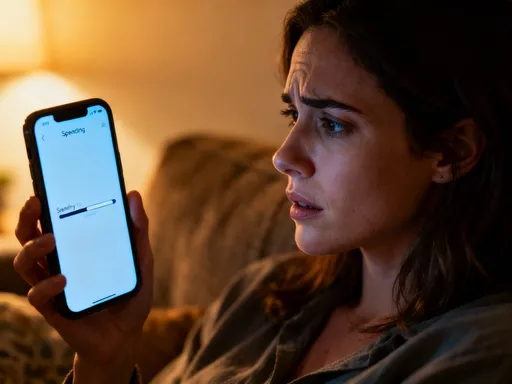
I kept saying ‘I’ll track it later’ — this app finally made holiday spending stress-free
How many times have you returned from a trip vowing, “Next time, I’ll keep better track of my spending”? You’re not alone. Holidays should be joyful, not haunted by financial surprises. I used to dread checking my bank balance after vacation — until I tried an expense-tracking app that didn’t feel like homework. It quietly recorded every coffee, ticket, and souvenir, turning chaos into clarity. This isn’t about strict budgets; it’s about peace of mind. Let me show you how this small tech shift changed the way I travel — and how it can do the same for you.
The Holiday Spending Trap: When Joy Meets Financial Regret
Let’s be honest — when you’re standing in front of a sunlit bakery in Paris, the last thing on your mind is your monthly budget. You just want that warm croissant, that perfect cappuccino, that little ceramic mug as a gift for your sister. In the moment, it feels harmless. But then another treat here, a museum entry there, a spontaneous boat ride with the kids — and suddenly, your vacation joy starts mingling with something heavier: unease. You realize you’ve lost count. You can’t remember what you’ve spent, where, or why. And when you get home? That email from your bank — the one with the total — hits like a surprise bill from a life you barely remember living.
I’ve been there more times than I’d like to admit. I used to tell myself, “I’ll track it later,” but later never came. By the time I opened my notebook — yes, I tried the old-school way — the receipts were gone, the memories blurred, and the numbers didn’t add up. The real cost wasn’t just financial. It was emotional. I felt guilty for overspending, frustrated that I hadn’t been more careful, and honestly, a little disappointed in myself. I had gone on vacation to feel lighter, freer — not to come home stressed and scrambling to adjust my household budget for the next three months.
And it wasn’t just me. I’ve talked to so many women — moms, sisters, friends — who feel the same. We plan these trips with such excitement, saving for months, dreaming about the destinations, packing carefully, making itineraries. But when it comes to money, we often wing it. We rely on mental math, which fails us under jet lag. We scribble numbers on napkins, which disappear in suitcase pockets. Or worse — we avoid thinking about it altogether, pretending that if we don’t look, it’s not happening. But it is happening. And that avoidance? It steals from the joy we worked so hard to create.
The truth is, holidays are emotionally charged. We’re not just spending money — we’re investing in memories. We want our kids to remember that beach day. We want our parents to feel pampered on their first trip in years. We want to feel like we’re living fully. But without some awareness, that desire to give and enjoy can tip into overspending. And the aftermath? It’s not just a number on a screen. It’s tension at home, postponed household purchases, or even arguments about money. That’s why I started looking for a better way — not to restrict myself, but to protect the peace I craved.
Discovering the App That Felt Like a Travel Companion, Not a Chore
My turning point came after a family trip to Italy. I came home to a credit card bill that made my stomach drop. I couldn’t explain where the money had gone. Sure, I remembered the big things — the hotel, the flights, the cooking class. But the small stuff? The gelatos, the train tickets, the little wooden toys for the grandchildren? Gone, unaccounted for, like sand slipping through my fingers. That’s when I decided enough was enough. I downloaded an expense-tracking app — not because I wanted to become a financial expert, but because I wanted to stop feeling like a tourist in my own money.
At first, I expected it to feel like homework. I pictured spreadsheets, complicated categories, constant calculations. But this app was different. It didn’t ask me to change who I was — it just asked me to tap my phone a few times a day. I set it up in less than ten minutes. I chose the currency, added my travel dates, and picked a simple color theme that felt calming, not clinical. I even named the trip “Italy with the Girls” — my daughter and sister. That small touch made it feel personal, not robotic.
What surprised me most was how it fit into my rhythm. I didn’t have to stop enjoying my vacation to use it. After buying a ticket for the Colosseum, I opened the app, tapped “Add Expense,” selected “Activities,” entered the amount, and snapped a photo of the receipt — all in under 20 seconds. Later, when I was too busy to type, I used the voice feature: “Lunch for three at Trattoria Bellini, 42 euros.” The app recorded it instantly. No stress, no pressure. It wasn’t watching over me like a strict teacher — it was walking beside me like a quiet friend who just wanted to help.
And here’s the thing: I didn’t use it perfectly. Some days I forgot. But the app didn’t punish me. It didn’t send guilt-tripping notifications. Instead, it gently reminded me the next morning with a soft chime and a message: “Don’t forget to log yesterday’s expenses.” I could catch up in a few minutes. That kindness — the lack of judgment — made all the difference. For the first time, tracking didn’t feel like a chore. It felt like caring for myself. I wasn’t restricting my joy — I was protecting it.
The Magic of Moment Recording: Spending with Meaning, Not Guilt
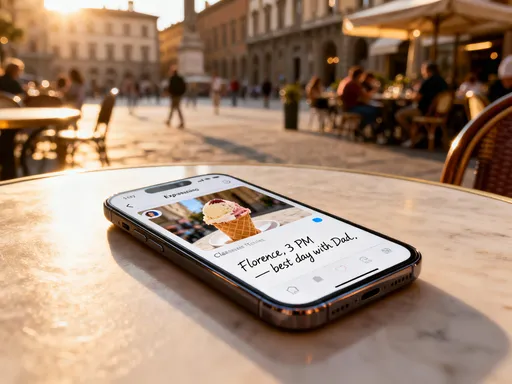
One afternoon in Florence, my daughter and I sat at a tiny table outside a gelateria. The sun was warm, the street was alive with music, and we shared a pistachio and a raspberry cone. It was one of those perfect moments — simple, sweet, full of connection. I paid, put my card away, and then, almost without thinking, opened the app. I logged the 5 euros, added the category “Food & Drink,” and then did something new: I tapped the photo icon and took a picture of us laughing, our cones dripping slightly in the heat. I added a note: “Best gelato ever. Made her day.”
That small act changed everything. Suddenly, that 5 euros wasn’t just a number — it was a memory. It wasn’t a line item to regret; it was a moment I cherished. I started doing this with other purchases. The 12 euros for the children’s museum ticket? I added a photo of my grandson’s face pressed against the dinosaur exhibit. The 8 euros for the lavender soap in Provence? I attached a picture of the market stall, the scent still fresh in my mind. Over time, my expense log became a digital scrapbook — not of prices, but of joy.
This is where the app did more than track money — it deepened my experience. I became more mindful about what I spent on, not because I was afraid of the cost, but because I wanted to create more moments worth remembering. I stopped buying random souvenirs just because I felt I should. Instead, I looked for things that felt meaningful — a handmade bookmark from a local artist, a recipe card from a baker who showed me how to make focaccia. Each purchase had a story, and the app helped me keep it.
And when I got home and reviewed my spending, I didn’t feel shame. I felt gratitude. I could see exactly where my money had gone — and more importantly, what it had bought. Not just things, but time, connection, laughter, discovery. That shift — from guilt to gratitude — was profound. I realized I wasn’t tracking expenses to limit myself. I was tracking them to remember. And in doing so, I spent more intentionally, not less freely. I gave myself permission to enjoy, because I knew each choice was aligned with what truly mattered.
How It Works: Effortless Tracking Without Killing the Vacation Vibe
I know what you’re thinking: “This sounds great, but I don’t want to be on my phone all day.” I felt the same way. I didn’t want to turn my vacation into a data-entry job. But here’s the beauty of the right app — it works with you, not against you. The key is choosing one that prioritizes simplicity and speed. I didn’t spend more than two minutes a day on it, and most days, it was less than that.
Let me walk you through a typical day. We started with breakfast at a café in Barcelona. I paid 18 euros for coffee, pastries, and juice. While we were still at the table, I opened the app, selected “Breakfast,” entered the amount, and used the voice command: “Breakfast for three, 18 euros.” Done. No typing, no menu diving. Later, when we bought metro tickets, I snapped a photo of the receipt right after printing it. The app saved it in the “Transport” category automatically. When I bought a scarf as a gift, I logged it instantly and added a note: “For Mom’s birthday.”
The app also used location tagging in the background — not to track me, but to help me remember. Later, when I reviewed my trip, I could see a map of where I’d spent money. There was the coffee shop in Montmartre, the bookstore in Edinburgh, the ferry terminal in Greece. Each dot on the map brought back a wave of memories. It wasn’t just about the money — it was about the journey.
Another game-changer was the daily budget feature. I set a soft limit — not a strict rule, but a gentle guide. The app didn’t lock me out if I went over; it just showed me where I stood. One day, we had a fancier dinner than planned. The app notified me: “You’re 15% over your daily average.” But instead of panic, I felt informed. I could adjust the next day — maybe skip a souvenir, maybe have a picnic instead of a restaurant. It gave me control, not restriction.
The real secret? Consistency, not perfection. I didn’t log every single thing right away. But I made it a habit to catch up each evening, while the day was still fresh. Ten minutes with a cup of tea, going through my photos and receipts. It became part of my wind-down routine — peaceful, reflective, grounding. And the best part? No more financial whiplash when I got home.
Family Travel Made Easier: Shared Trips, Shared Clarity
Let’s talk about the elephant in the room: money and family. Even the closest relationships can get strained when spending isn’t clear. I’ve been on trips where we said, “We’ll figure it out later,” only to have awkward conversations weeks afterward. “You owe me for the taxi.” “I paid for lunch yesterday — did you get that?” It’s not about the money, really. It’s about fairness. It’s about not wanting to feel taken advantage of — or like you’re taking advantage.
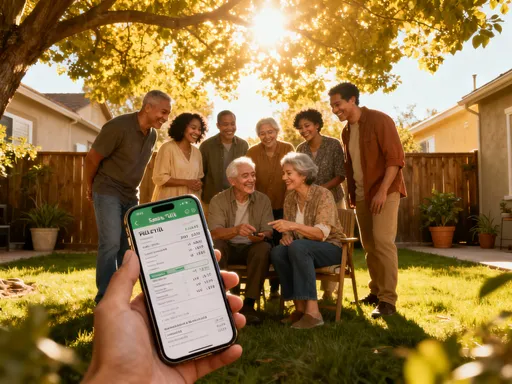
That changed when I discovered the shared wallet feature. On my last trip with my sister, we created a joint space in the app. Every time one of us paid, we logged it and tagged it as “Shared.” The app split the costs automatically and showed who owed what — in real time. No IOUs on napkins, no mental math, no passive-aggressive texts. Just clarity.
One night, we had dinner with her husband and my daughter. I paid the 85-euro bill. I opened the app, logged it, selected “Dinner,” chose “Split 4 ways,” and it calculated each person’s share. My sister saw it instantly on her phone. “Got it,” she texted. “I’ll cover gas tomorrow.” Simple. Clean. No tension. The app became our neutral referee — not a person keeping score, but a tool that made fairness effortless.
But it wasn’t just about splitting costs. It was about sharing the experience. We could both see the growing list of memories — the boat tour, the wine tasting, the hotel spa. We’d laugh over the “Most Expensive Gelato” category. We’d plan our next day based on how we were doing budget-wise. It brought us closer, not just financially, but emotionally. We were in it together — not just as travelers, but as partners in creating something beautiful.
For families with kids, this is even more powerful. When I travel with my grandchildren, I use the app to teach them gently about money. “This museum pass is 20 euros — that’s four ice creams,” I’ll say. Not to scare them, but to help them understand value. They start to appreciate the choices we make. And when they pick a small souvenir, they feel proud — not guilty — because they know it fits into our plan.
Beyond the Trip: Lasting Habits That Improve Everyday Life
The most unexpected benefit? The app didn’t just change my travel — it changed my life. When I came home, I didn’t abandon it. I kept using it for groceries, for household bills, for my monthly coffee with friends. The awareness I’d gained on vacation spilled over into my daily routine. I started noticing patterns. I saw how much I spent on takeout on busy evenings. I realized I was paying for subscriptions I’d forgotten about. But instead of shame, I felt empowered. I had information — and information is power.
I became more intentional. I planned meals ahead. I canceled unused services. I started setting small goals — save for a new kitchen gadget, build a little cushion for car repairs. The app helped me see progress. And that felt good. Not restrictive, but liberating. I wasn’t cutting back — I was choosing differently.
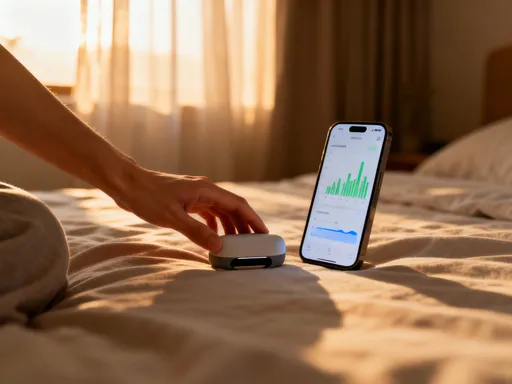
More than that, I felt calmer. I wasn’t jumping every time my bank app pinged. I knew where my money was going. I had a sense of control. And that peace of mind? It improved my sleep, my mood, my relationships. I was less stressed, more present. I wasn’t just managing money — I was managing my well-being.
This small tool gave me a big gift: confidence. I wasn’t perfect. I still treated myself. But I did it with awareness, not avoidance. I learned that financial peace isn’t about having more money — it’s about knowing what you have and making choices that align with your values. And that’s a skill that lasts long after the vacation ends.
Choosing the Right App: What Really Matters for Stress-Free Travel
Not all apps are created equal. I tried a few before finding the one that worked for me. Some were too complicated, filled with charts and jargon. Others looked pretty but crashed when I needed them most. What I learned is that the best app isn’t the fanciest — it’s the one that fits your life.
Here’s what really matters: ease of use. If it takes more than 20 seconds to log a coffee, you won’t use it. Look for voice entry, photo receipts, and one-tap categories. Offline access is crucial — you won’t always have Wi-Fi in a mountain village. Multi-currency support is a must for international trips; it should convert automatically and accurately. And privacy? Non-negotiable. Make sure your data is encrypted and that you control who sees it.
Don’t get distracted by flashy features. You don’t need AI predictions or social sharing. You need reliability, simplicity, and trust. Try a few apps before your next trip. Use them for a week at home. See which one feels natural. Which one you actually enjoy using? That’s the one.
And remember — the goal isn’t to become a budgeting expert. It’s to travel with peace of mind. To enjoy every moment — the big ones and the small — without fear of the bill that comes after. To know that your spending reflects your values, not your impulses. To come home not just with souvenirs, but with clarity, confidence, and beautiful memories — all in one place.
So if you’ve ever said, “I’ll track it later,” and never did — I get it. But what if this time were different? What if you had a quiet helper that made it easy, meaningful, and even a little joyful? That’s what I found. And I hope you do too. Because you deserve a vacation that feels as good when it’s over as it did when you were living it.