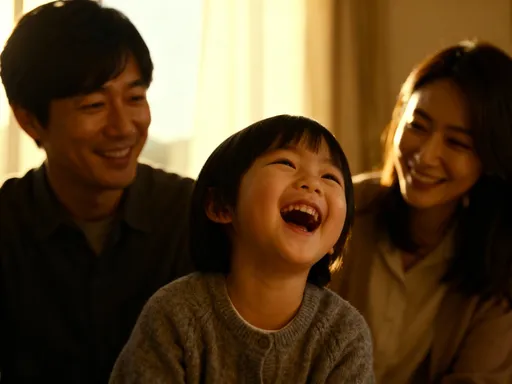
From Forgotten Moments to Lasting Legacy: How Video Diaries Brought Our Family Closer
Imagine flipping through a photo album where the pictures don’t just sit still—but laugh, cry, and tell stories. That’s what happened in our home when we started family video diaries. No fancy gear, no pressure—just real moments captured simply. I used to worry our everyday chaos would erase precious memories. But now, with just a few taps each week, we’re not just saving videos—we’re building connection, one honest moment at a time. It started small, almost by accident, but it changed how we see each other, how we remember, and how we love. And the best part? You don’t need to be tech-savvy or have the latest phone. You just need a few quiet seconds and the willingness to say, ‘This matters.’
The Moment We Realized We Were Losing Time
It hit me during a quiet evening, the kind that feels rare in a busy household. My daughter was curled up on the couch, half-drowsing after a long day at school. Out of nowhere, I asked her, ‘What was your favorite part of last year?’ She blinked, then frowned, searching for an answer. And when she finally said, ‘I don’t know… I guess… the field trip?’ I felt a pang deep in my chest. This was my child—someone I’d watched grow from a wobbly toddler into a thoughtful, creative girl—and I couldn’t even help her recall something meaningful from her own life.
We had photos, of course. Hundreds of them. Birthday cakes with melting candles, school plays with mismatched costumes, holiday mornings with tangled wrapping paper. But photos only show what things looked like, not how they felt. They don’t capture the sound of her first full sentence—‘I did it all by myself!’—or the way my husband sings off-key in the kitchen every Sunday morning. They don’t preserve the laughter that erupts when the dog steals a sandwich off the counter or the hushed whisper of bedtime stories. We weren’t just missing details—we were losing the soul of our story.
That night, I pulled up our digital photo library. Scrolling through, I realized something unsettling: most of the images were taken at big events. Birthdays, holidays, vacations. The everyday magic—the pancake breakfasts, the impromptu dance parties, the quiet talks before bed—was barely there. And when it was, it was frozen in silence. I could see my son’s smile, but I couldn’t hear the joke that caused it. I could see my mom holding her grandchild, but not hear her soft lullaby. We were collecting moments like souvenirs, but they weren’t alive. That’s when I decided we needed something more. Not perfection. Not professional editing. Just truth. And that’s how our video diary journey began—not with a plan, but with a promise: to stop just capturing life and start truly remembering it.
Why Video Beats Photos for Real Connection
Let’s be honest—photos are beautiful. I’ll always cherish the picture of my daughter’s first day of kindergarten, her tiny hand gripping the backpack straps, eyes wide with wonder. But when I watch the video from that same morning, everything changes. I hear her asking, ‘Do I have to go in alone?’ in that fragile voice only a parent recognizes. I hear my husband whisper, ‘You’ve got this, sweetheart,’ and her small reply, ‘Okay… I’ll try.’ That 30-second clip holds more emotion than any photo ever could. It’s not just a memory—it’s a living, breathing piece of our history.
Video does something photos can’t: it preserves presence. It captures tone, timing, and texture. The way my mother-in-law laughs—suddenly, loudly, like she’s surprised by her own joy—is something no still image can convey. The way my son pauses before answering a tough question, his fingers twisting the hem of his shirt, tells me more about his feelings than any posed smile. These micro-moments are where real connection lives. And when we watch them together as a family, something powerful happens. We re-experience the moment. We laugh again. We sometimes cry. And in those shared reactions, we rebuild bonds that daily routines can wear thin.
I remember showing an old video to my niece during a visit. It was a silly one—my kids attempting a homemade magic trick that ended with flour exploding across the kitchen. She laughed so hard she cried. But then she said, ‘I wish I could’ve been there.’ And in that moment, I realized these videos aren’t just for us—they’re invitations. They let people in, even when they weren’t physically present. For grandparents who live far away, these clips are lifelines. For our children, they’re proof that their voices matter, their thoughts are valued, their laughter is loved. And for us as parents, they’re mirrors—showing us not just how our kids have grown, but how we’ve grown alongside them.
Starting Small: The 2-Minute Weekly Habit That Changed Everything
I’ll admit—I almost didn’t start because I thought it had to be perfect. I imagined lighting, tripods, background music, maybe even a script. The idea felt overwhelming, like one more thing on an already overflowing to-do list. But then I watched a friend share a 90-second clip of her son teaching the family dog to ‘sit.’ No edits. No filters. Just raw, joyful chaos. And it moved me to tears. That’s when I realized: this isn’t about production. It’s about participation.
So we began with one rule: one short video per week. That’s it. No pressure to make it long, polished, or profound. Sometimes it’s just me holding the phone while the kids show off a drawing. Other times, it’s my husband filming breakfast, capturing the way the sunlight hits the table and the kids bicker over toast. We don’t stage it. We don’t rehearse. We just press record when something feels real. And that tiny commitment—less than two minutes a week—created a ripple effect I never expected.
At first, the kids treated it like a performance. ‘Look at me!’ they’d shout, waving wildly. But over time, something shifted. They started sharing quieter things—what scared them at school, what made them proud, what they wished for. One Sunday, my daughter said, ‘Can I talk about how I felt sad when my goldfish died?’ And just like that, our video diary became more than a memory keeper—it became a safe space. The habit didn’t just help us remember; it helped us listen. It turned ‘I should talk to them more’ into ‘We did—right here, on camera, in our pajamas.’ And the most beautiful part? We never miss a moment because we’re too busy setting up the shot. The moment is the shot.
Choosing the Right Tools—Without the Tech Stress
I used to think you needed expensive equipment to make meaningful videos. A fancy camera. A microphone. Editing software that looked like it belonged in a Hollywood studio. But here’s the truth: your phone is more than enough. In fact, it’s perfect. It’s always with you. It records in high quality. And most importantly, it’s unobtrusive. When you pull out a big camera, everyone freezes. But when Mom just holds her phone like she’s texting? That’s when the real moments happen.
We use a simple, free app that automatically backs up our videos to a private cloud. No more worrying about losing files if the phone dies. It organizes clips by date, so we can easily find ‘June 2023’ or ‘Christmas Morning.’ Some apps even let you add tags—like ‘first bike ride’ or ‘Grandma’s birthday’—so searching is fast. I was nervous about privacy at first, but this app lets us control who sees what. Only immediate family has access. No algorithms. No ads. No risk of something personal ending up where it shouldn’t.
The best part? We don’t spend hours editing. No transitions. No background music. No captions. We leave in the background noise—the dog barking, the tea kettle whistling, the neighbor’s lawnmower. Because that’s life. That’s home. The technology isn’t meant to impress—it’s meant to disappear. It’s there to serve the moment, not steal the spotlight. And when you keep it simple, you remove the barrier between you and the memory. You don’t need to be a tech expert. You just need to care. And if your phone can take a photo, it can save a lifetime of voices.
Tracking Growth: Watching Our Selves Evolve, Together
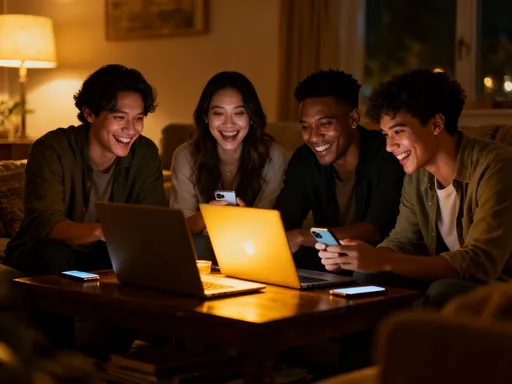
Last winter, we gathered around the living room screen for our annual ‘Memory Night.’ We’d been doing video diaries for over a year, and I thought it would be fun to look back. I expected laughter. Maybe a few tears. But I didn’t expect to feel so… seen. Watching clips from the past year, I noticed things I’d completely missed in real time. My daughter, who once spoke in whispers during family discussions, now confidently shared her opinions. My son, who used to shut down when frustrated, was learning to say, ‘I need a minute.’ And my husband—well, he was slower to react, more patient, more present. These weren’t dramatic changes. They were subtle, quiet shifts. But seeing them unfold on screen made them undeniable.
For our kids, it was like watching their own origin stories. ‘I used to be scared of the dark!’ my daughter said, laughing at a clip where she asked to sleep with a nightlight at ten years old. ‘And now I turn it off myself.’ That moment wasn’t just about courage—it was about continuity. It showed her that growth isn’t linear, but it’s real. And for us as parents, it was a gift to witness our own evolution. I heard my voice in early videos—tired, rushed, often interrupting. But over time, I noticed I was pausing more. Listening more. Smiling more. The videos didn’t judge. They simply reflected. And in that reflection, we found pride, healing, and a deeper understanding of who we’re becoming.
One of the most powerful moments came when we watched a clip from six months earlier. My son was upset about a grade and said, ‘I’m never going to be good at math.’ In the moment, I’d reassured him, but I didn’t think much of it. But when we rewatched it, and then compared it to a recent video where he proudly showed off a solved worksheet, the progress was clear. ‘Look how far you’ve come,’ I said. He smiled and said, ‘I forgot I said that. I’m not scared of math anymore.’ That’s the magic of video diaries—they don’t just capture where you’ve been. They show you how far you’ve come, even when you didn’t realize you were moving.
Making It a Family Ritual—Not a Chore
The key to keeping this habit alive wasn’t discipline—it was joy. We turned our weekly video into a ritual, something to look forward to, not dread. Every Sunday evening, we clear the coffee table, put on soft music, light a candle, and pass around snacks. It’s not fancy, but it’s ours. We call it ‘Sunday Stories,’ and the kids know it’s their time to share. Sometimes they pick the topic—‘Best moment of the week,’ ‘Something that made me laugh,’ ‘A person who helped me.’ Other times, we go around the circle and just talk.
What started as a memory project became a communication ritual. The videos gave our kids a platform to express themselves in a way that felt safe. They weren’t being interrupted. They weren’t being corrected. They were being recorded—literally and figuratively—heard and valued. And for us as parents, it became a weekly check-in. We weren’t just asking, ‘How was school?’ We were creating space for real answers. ‘I was nervous about the test.’ ‘I made a new friend.’ ‘I felt left out at recess.’ These weren’t always easy conversations, but they were necessary. And because they happened on camera, they carried weight. They became part of our family’s story, not just passing feelings.
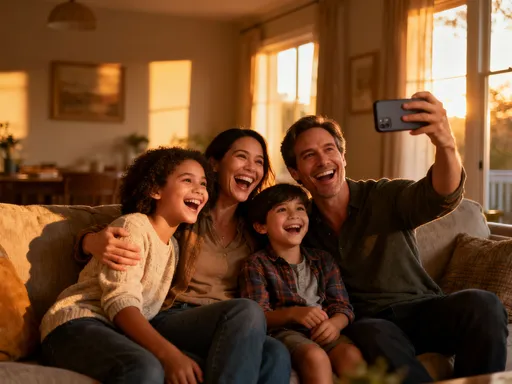
There’s a rhythm to it now. The dog hops onto the couch. The younger one grabs the stuffed bear as a ‘microphone.’ The older one adjusts the phone. And then, one by one, we speak. No pressure. No perfection. Just presence. And when we’re done, we save it, hug, and move on. But that moment—those few minutes of focused attention—has become sacred. It’s not just about the video. It’s about the message it sends: ‘You matter. Your voice matters. This family is your safe place.’
The Gift We’re Building: A Legacy of Love and Memory
Sometimes, when I’m tucking the kids in, I think about the future. Not just their futures, but the future of these videos. Will my grandchildren one day watch a clip of their great-grandma laughing at a knock-knock joke? Will they hear my son’s high-pitched ‘Look what I made!’ from age seven? Will they feel the warmth of our kitchen on a rainy Sunday, just from the sound of our voices? I hope so. Because these aren’t just recordings. They’re heirlooms. They’re love letters from today to tomorrow.
In a world that moves faster every year, where attention is scattered and connection often feels shallow, this is our anchor. We’re not chasing likes or views. We’re not performing for an audience. We’re building something quiet, deep, and lasting. A legacy not of wealth or fame, but of presence. Of love spoken, not just felt. Of moments that could have slipped away, now held gently in digital hands.
I used to worry that our daily life was too ordinary to remember. But now I see that it’s the ordinary that matters most. The bedtime chats. The kitchen debates. The unscripted laughter. These are the threads that weave the fabric of family. And by pressing record, we’re not just preserving the past—we’re shaping the future. We’re teaching our children that their stories matter. That their voices have value. That they belong to something bigger than themselves.
So if you’ve ever looked at a photo and thought, ‘I wish I could hear them,’ I’ll say this: you can. You don’t need special skills. You don’t need perfect conditions. You just need to begin. With one clip. One honest moment. One ‘I love you’ spoken into a phone. Because the most powerful technology isn’t in the device—it’s in the decision to care enough to remember. And that’s a gift that keeps giving, long after the screen goes dark.